Selected work, shown honestly

Real products built around complicated work.

BusinessStub and LoanLens are live products designed and built by Boise AI Studio. These case studies focus on the product problem, systems shipped, and choices visible today—without invented performance metrics or guaranteed outcomes.

Find Your Best First Project

Live product work

Two products. Two very different operating problems.

One organizes digital-property inventory, inquiries, and handoffs. The other turns SBA borrower inputs into reviewed document packets. Both required end-to-end product thinking across strategy, UX, software, operations, and deployment.

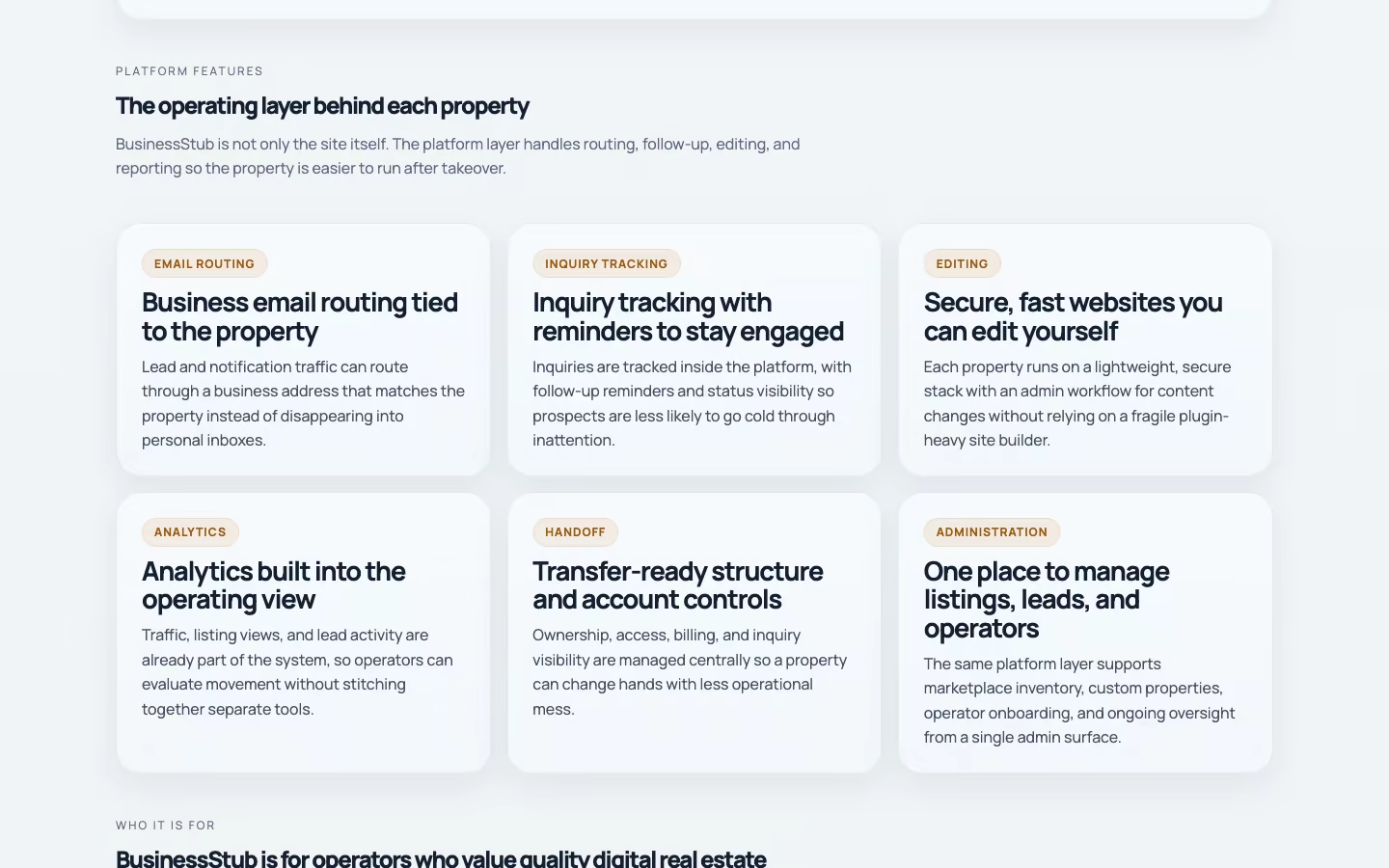
BusinessStub platform feature grid showing email routing, inquiry tracking, editing, analytics, handoff, and administration
Case studyDigital property marketplace and operations

Turning scattered digital-property work into one operating platform.

BusinessStub brings inventory discovery, structured listings, custom-property intake, inquiry routing, editing, analytics, operator workflows, and transfer controls into one product.

Product
Marketplace and operations platform
Shipped
Public marketplace, custom-property intake, administrative workflows, and site infrastructure
Read the BusinessStub case study
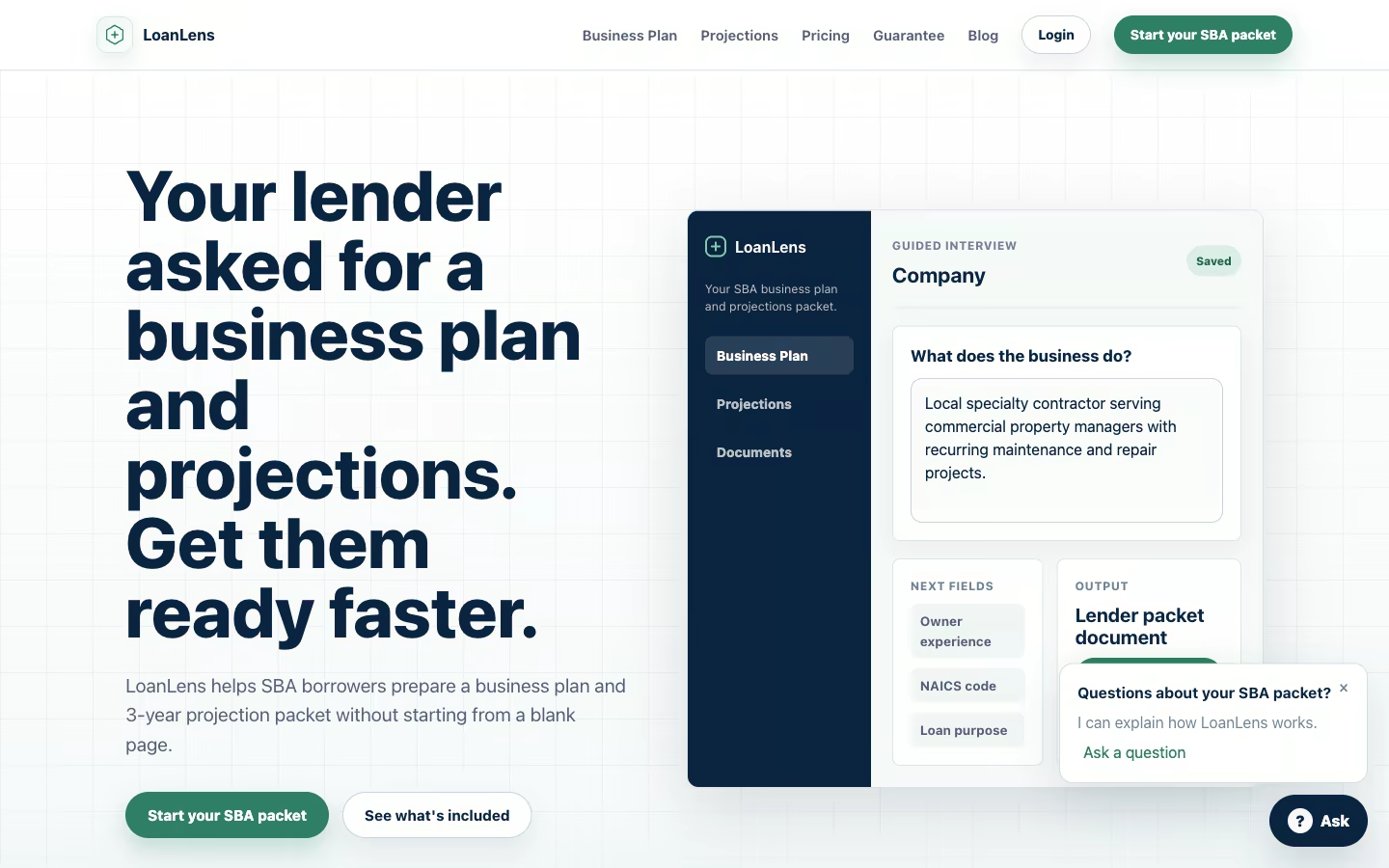
LoanLens homepage showing a guided SBA business-plan interview and document packet product interface
Case studySBA document-preparation SaaS

Guiding borrowers from rough notes to a review-ready document packet.

LoanLens combines adaptive intake, AI-assisted business-plan drafting, three-year projection workbook generation, editing, human review, billing, and final downloads in one borrower workflow. It prepares documents; it does not lend or decide loan outcomes.

Product
Multi-role document workflow SaaS
Shipped
Marketing site, authenticated application, document pipeline, review operations, and billing
Read the LoanLens case study

Planning library

Planning blueprints, clearly separated from shipped work

The examples below are starting models, not additional client projects. A real engagement depends on the business's systems, data, people, policies, risks, and goals. Discovery may show that a smaller, different, or non-AI solution is the better choice.

Illustrative blueprint / AI consulting

AI opportunity map for a growing service business

Useful for: An established company with several AI ideas but no shared priority or pilot plan.

Example only. No client, deployment, savings, or performance result is represented.

Situation

Leaders hear requests from sales, operations, and customer service while questions about data, risk, ownership, and adoption remain unresolved.

Possible solution

Map selected workflows, rank opportunities using consistent criteria, and define one bounded pilot with human review and a clear next decision.

Illustrative workflow

  1. Interview process owners and representative users.
  2. Map friction, information, judgment, and exception paths.
  3. Compare opportunities by value, feasibility, risk, and readiness.
  4. Write a pilot brief with ownership, tests, and stop conditions.

Signals to review

  • Agreement on the workflow and intended user
  • Availability and appropriateness of required information
  • Clarity of human review and ownership
  • Evidence needed for the next investment decision
Explore AI Consulting

Illustrative blueprint / AI automation

Estimate follow-up and job handoff workflow

Useful for: A contracting or home-services team that coordinates estimates and accepted work across several tools.

Example only. No client, deployment, time savings, conversion rate, or revenue result is represented.

Situation

Status changes, customer messages, job setup, and missing details rely on manual checks and personal memory.

Possible solution

Use validated status changes to prepare the next communication and task, move approved information, and route exceptions to the responsible person.

Illustrative workflow

  1. Read an approved estimate status from the source system.
  2. Validate required customer and job information.
  3. Prepare the appropriate message and internal next step.
  4. Send incomplete or unusual cases to a visible review queue.

Signals to review

  • Follow-up at the intended process stage
  • Data that requires correction before handoff
  • Exceptions reaching the right owner
  • Staff trust in the workflow history
Explore AI Automation

Illustrative blueprint / custom software

Operations hub for a multi-location team

Useful for: A business that assembles status, issues, and follow-up from separate documents and message threads.

Example only. No client, delivered application, adoption, or efficiency result is represented.

Situation

Managers lack a consistent view of what needs attention, who owns the next step, and which information is current.

Possible solution

Create a role-aware web application for standardized updates, exception visibility, task ownership, and useful operating history.

Illustrative workflow

  1. Collect structured updates from responsible users.
  2. Validate required information and preserve source context.
  3. Highlight exceptions and assign follow-up owners.
  4. Provide a current operating view and reviewable history.

Signals to review

  • Completeness of routine updates
  • Visibility of time-sensitive exceptions
  • Use during existing management routines
  • Workarounds that reveal missing product needs
Explore Custom Software

Illustrative blueprint / web design

Guided lead website for a local service company

Useful for: An established business whose site does not explain service fit or collect enough context for a useful first response.

Example only. No client, ranking, traffic, lead, conversion, or revenue result is represented.

Situation

A single generic services page and contact form force visitors and staff to do too much clarification after the inquiry.

Possible solution

Create intent-focused service pages, honest fit guidance, practical FAQs, and a guided form that captures the business context needed for follow-up.

Illustrative workflow

  1. Match each core service to a clear visitor question and search intent.
  2. Explain problems, deliverables, fit, process, and next steps.
  3. Collect useful inquiry context with accessible form states.
  4. Route submissions and measure site behavior without dark patterns.

Signals to review

  • Visitors reaching the relevant service content
  • Quality and completeness of inquiry context
  • Mobile usability, accessibility, and performance
  • Search and inquiry patterns reviewed without guaranteeing outcomes

Explore Web Design

Illustrative blueprint / AI chatbot

Knowledge assistant with a responsible human handoff

Useful for: A business with approved information and recurring questions from customers or employees.

Example only. No client, deployment, accuracy rate, support reduction, or lead result is represented.

Situation

People repeatedly search for basic answers while sensitive, unusual, or account-specific questions still require a person.

Possible solution

Create a clearly identified assistant that uses approved knowledge, states limits, captures context, and escalates questions outside its role.

Illustrative workflow

  1. Organize approved source information and assign a content owner.
  2. Define supported questions, prohibited topics, and handoff triggers.
  3. Test ordinary, ambiguous, sensitive, and adversarial prompts.
  4. Review knowledge gaps and improve source content over time.

Signals to review

  • Answers grounded in approved source material
  • Unknown questions handled without invented certainty
  • Handoffs containing useful context
  • Knowledge gaps reaching the content owner
Explore AI Chatbots